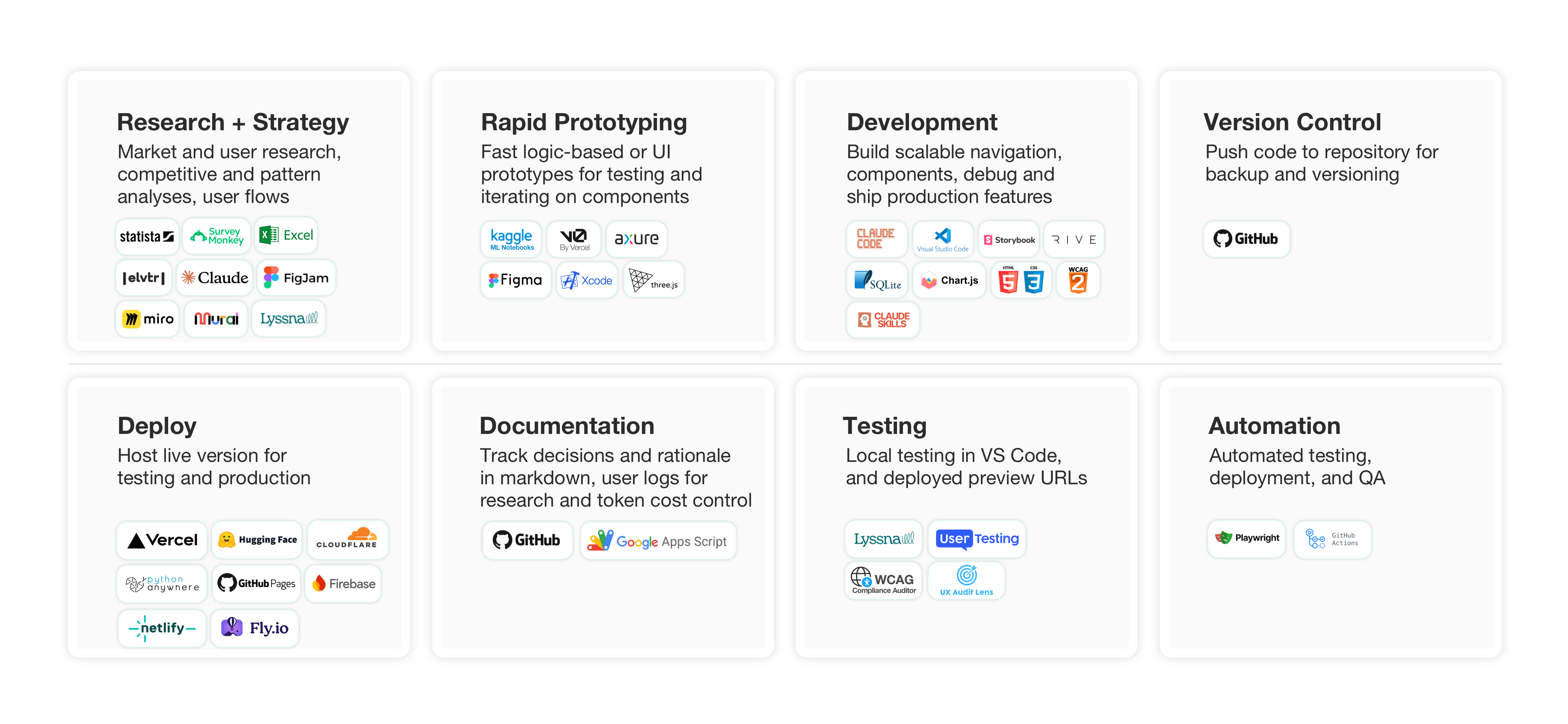
My process is evolving, shaped by what I learn as I work across different phases and as new products or tech come online.
(Visual polish is intentionally light — my focus is the AI underneath.)
Made with AI: Prototype
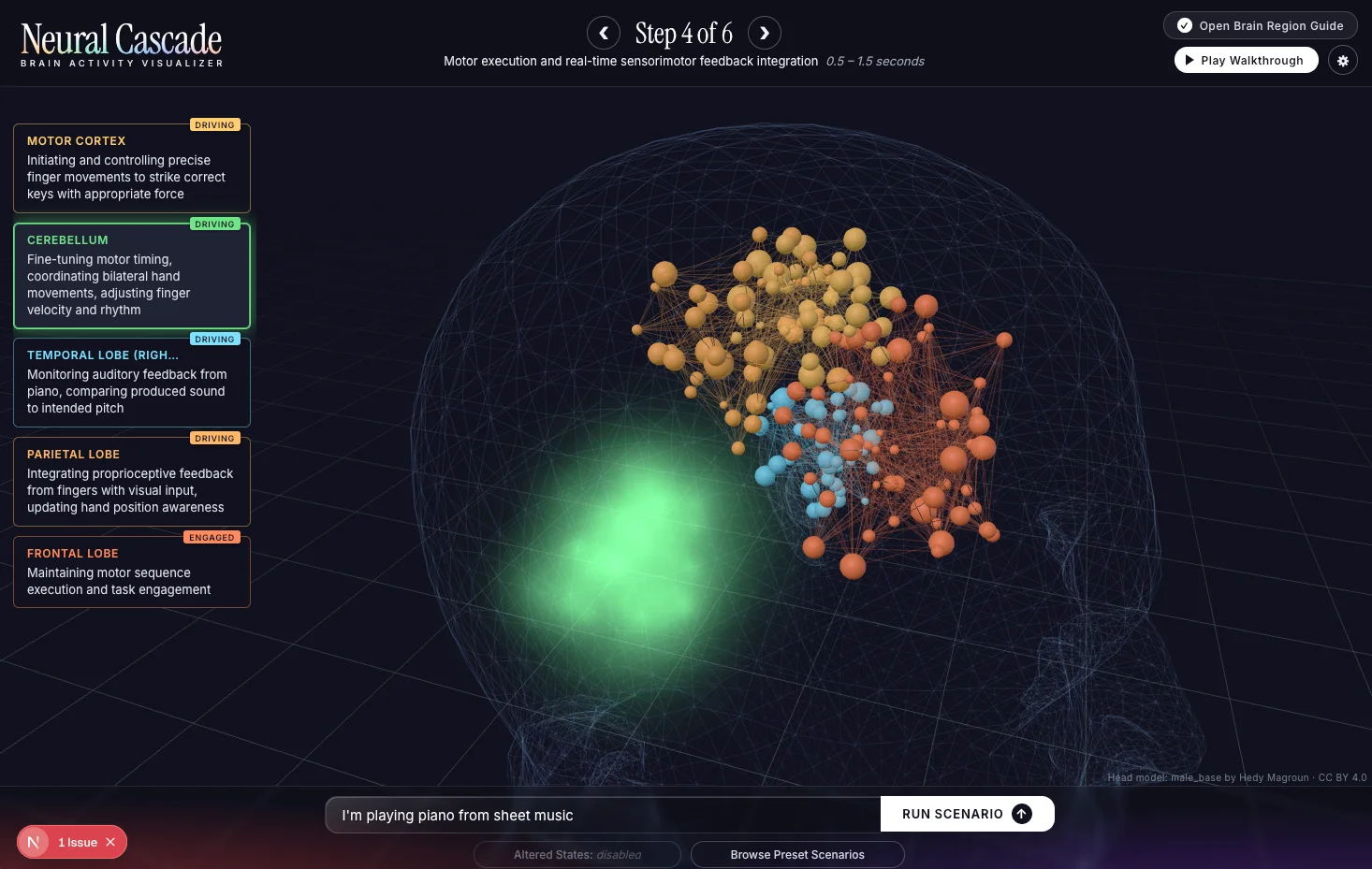
Neural Cascade
See What Your Brain Sees
Type any experience — a whiff of coffee, locking eyes with a stranger, stepping barefoot into wet grass — and watch the brain light up in response. Each region activates with an explanation of why it fires, inside a low-poly head you can rotate.
Each input goes through the Anthropic API and returns a structured response — brain regions, activation order, and explanations. The API isn't acting as a chatbot; it's returning structured data the front-end plays back.
Face tracking turns the head into a puppet that follows your movement, with wireframe hands that mirror yours. Experimental, for fun.
Anthropic API (Claude Sonnet)Custom GLSL ShadersGoogle Apps ScriptMediaPipeNext.jsThree.jsVercel
A gaze-controlled arcade game for macOS inspired by Atari's Missile Command. Players defend cities leveraging built-in macOS Accessibility — Eye Tracking or Head Pointer to aim, with Dwell Control or Facial Gestures to fire. Visual style inspired by classic Atari arcade art and EC Comics.
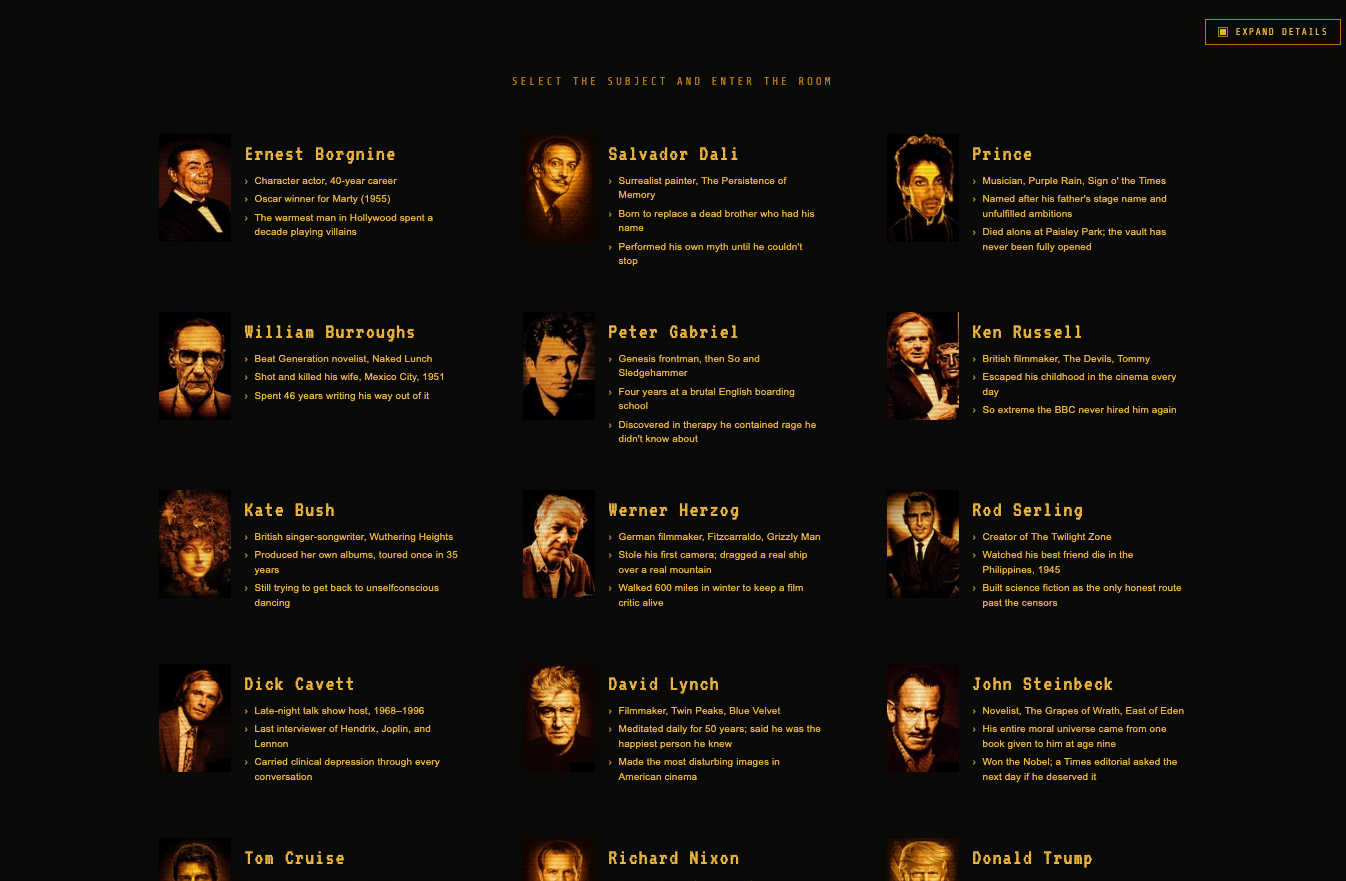
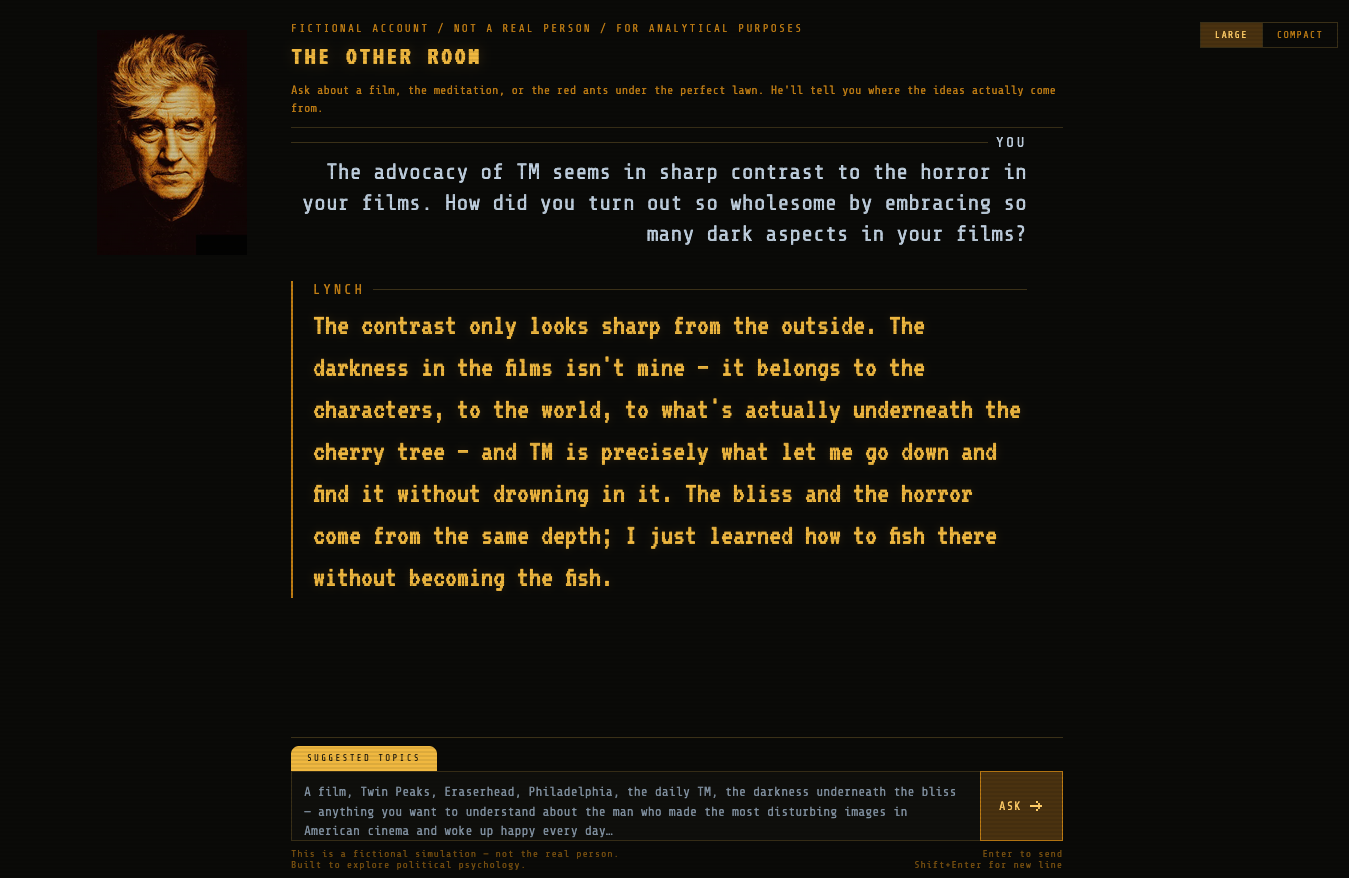
Each profile is built from primary sources and biography — mapping the formations that produced them, the gap between the person and the persona, and the psychology underneath both. Carl Jung called that gap the shadow.
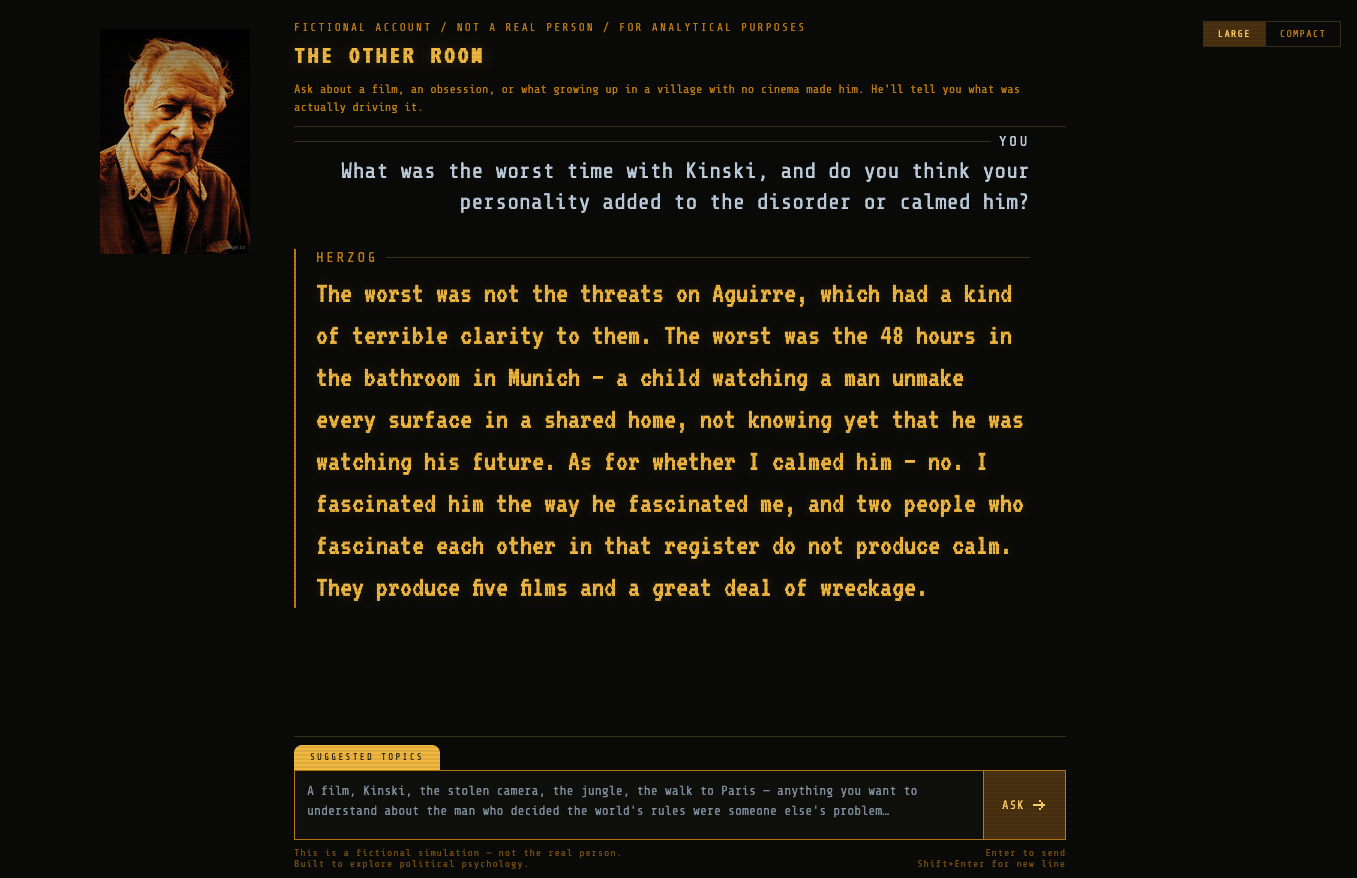
These profiles let the shadow speak. Each one is psychological scaffolding — tone, vocabulary, self-awareness, the topics that open and the ones that close — assembled from the record. Future iterations will deepen the voice with documented cadence from each subject's own interviews and writing.
Bring a question, a current event, or just start somewhere. The responses come from the psychological model, not the public record.
Anthropic API (Opus, Sonnet, Haiku)Google Apps ScriptVercel
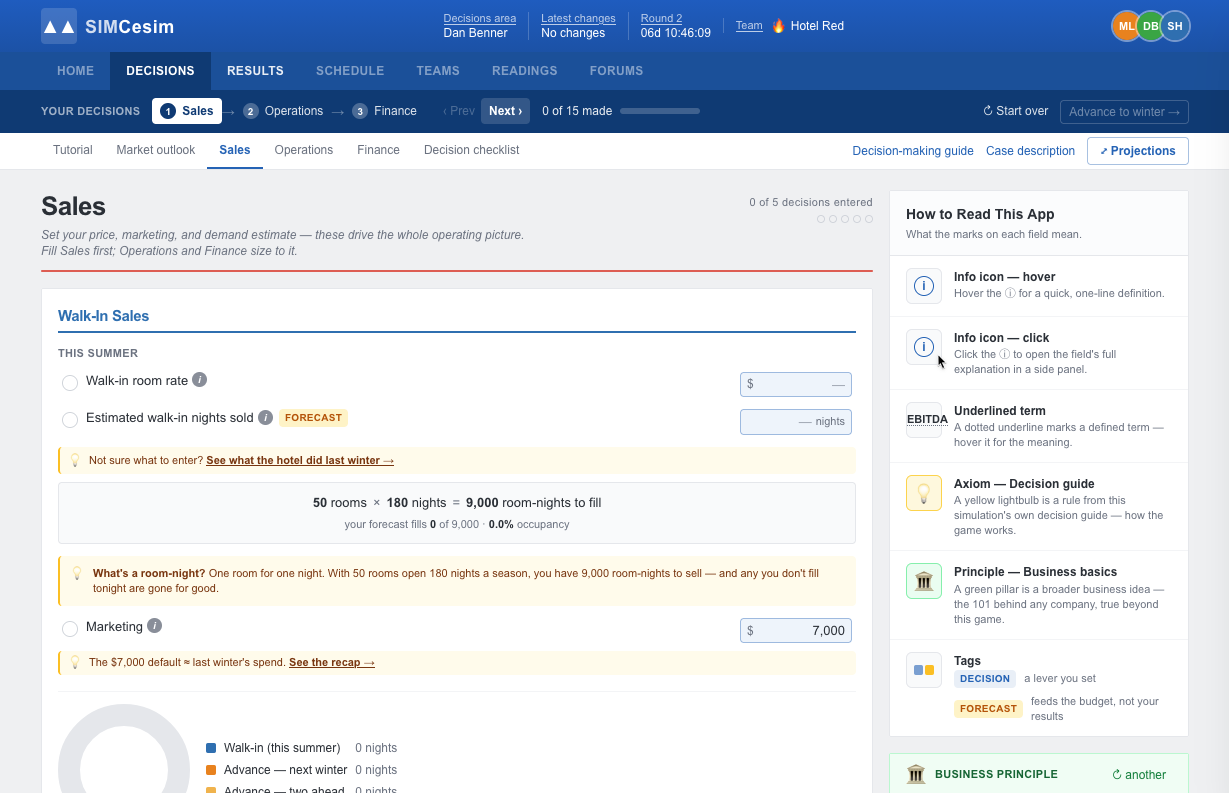
When I was in a Mini MBA program, one of the courses ran on Cesim Service, a business simulation app where teams compete by running a virtual hotel. The tool worked mechanically, but it taught poorly: decision fields without labels, value ranges, units, or definitions, and almost no explanation of the terms or the cause-and-effect behind them. My whole team finished the first session without actually learning anything.
SIMCesim is my rebuild of that interface — same structure, but with the missing learning layers added in: guided decision steps, plain-language field explanations, the reasoning behind each input, and in-context economic principles for people who've never studied business administration.
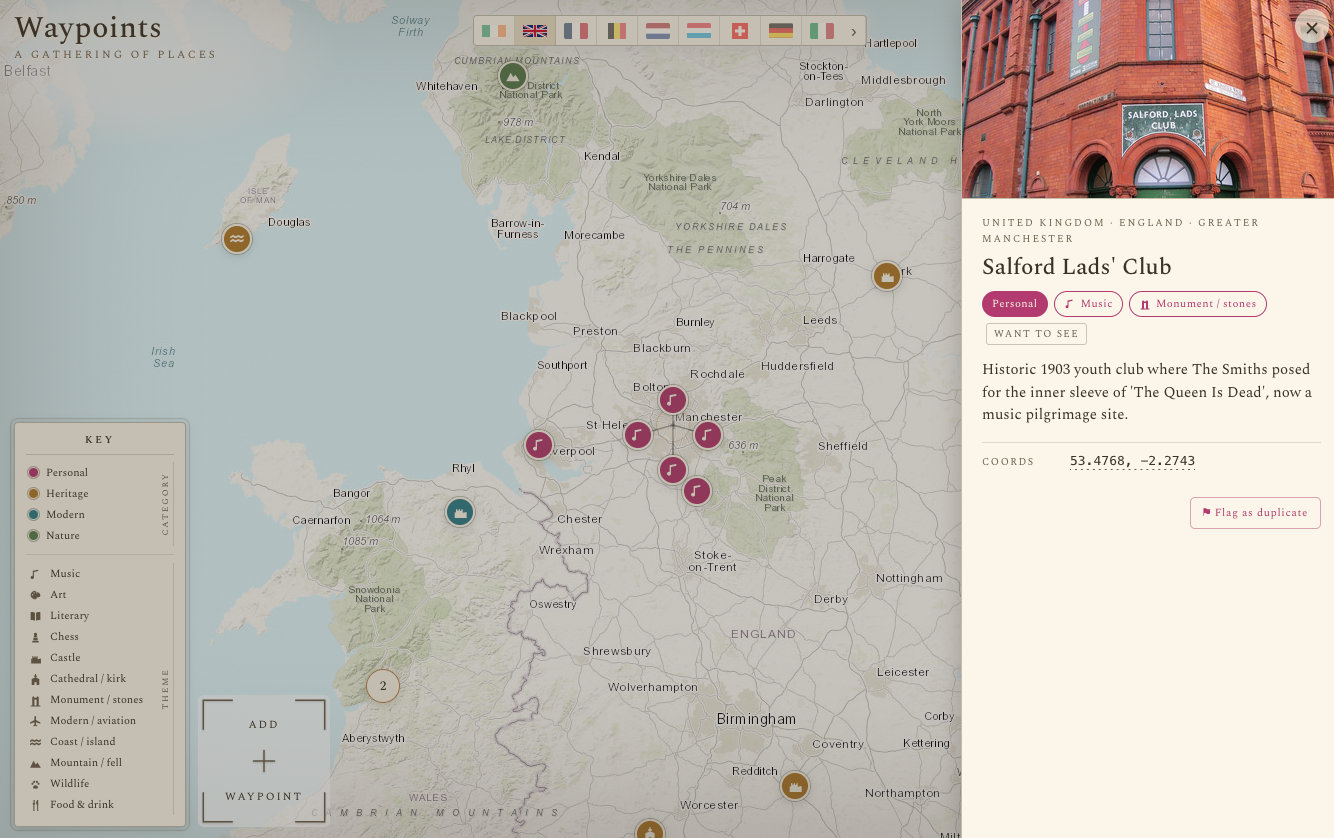
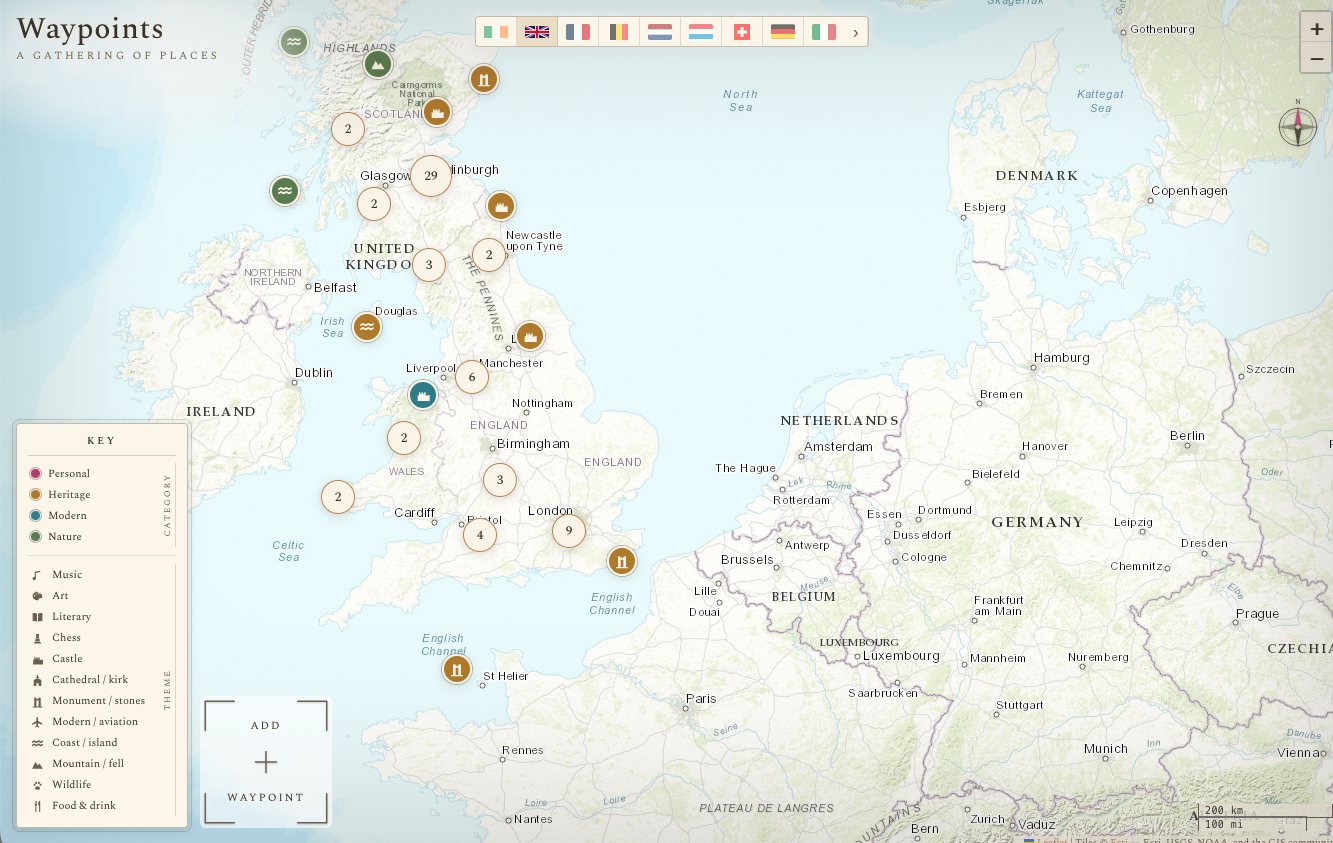
Waypoints is a private map for organizing places worth visiting. Each place is a pin on a zoomable map, colored by type and marked by theme, so a region fills in with everything worth a stop.
It spans the UK, Ireland, France, Italy, Spain, and Germany, mixing the well-known with the personal: historical sites like Carcassonne, modern marvels like Bilbao's Guggenheim, natural landmarks like the Cliffs of Moher, and quieter things like band origins and the cemeteries behind certain album covers.
It's AI-augmented, so collecting places worth visiting takes almost no effort. A phrase like “Clockwork Orange tunnel,” a link, or a screenshot is enough. It fills in the location, category, and a short description, then drops the pin.
Anthropic Claude APILeafletPythonTesseract OCRVercel
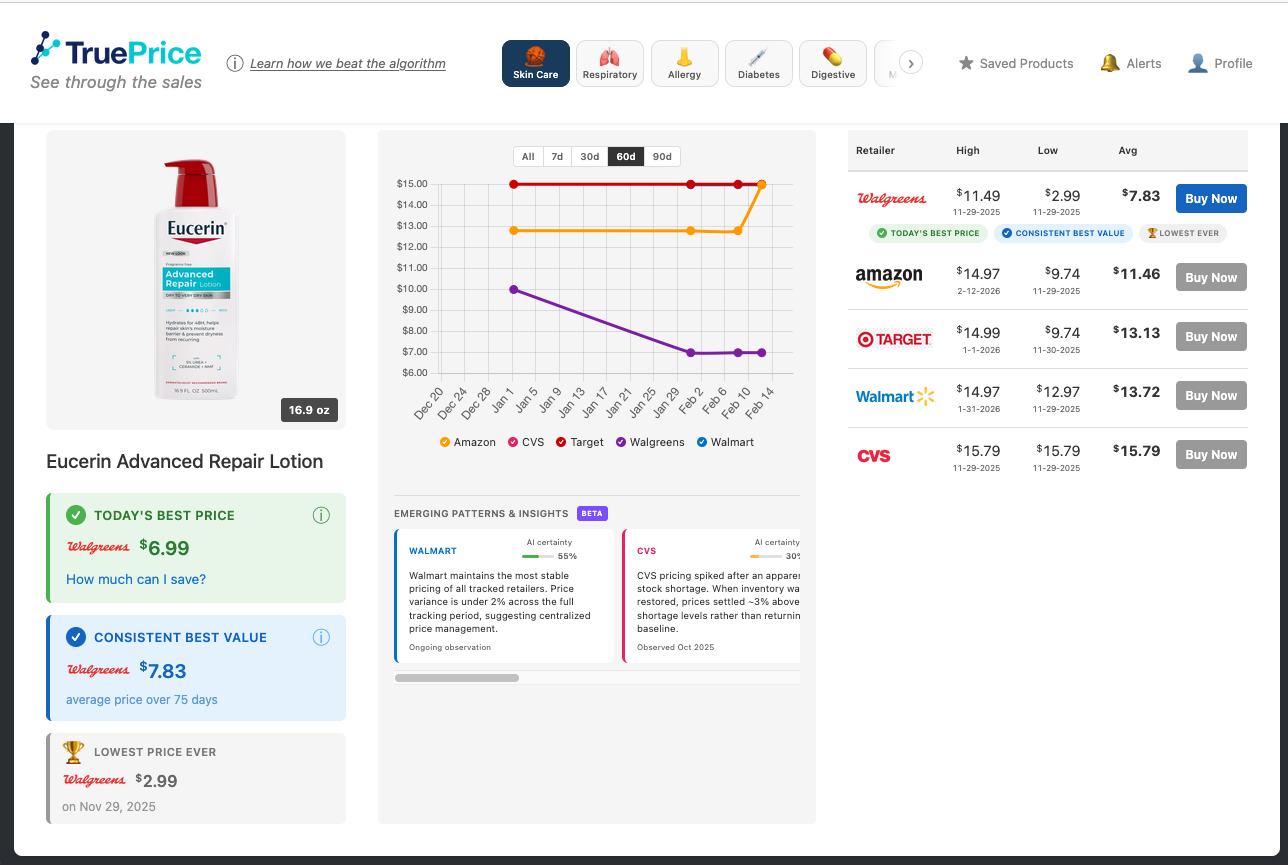
Historical Product Price Data for Chronic Conditions
Retailers use algorithms to make every price look like a deal. "Was $25, now $22!" But was it ever really $25? TruePrice tracks actual price history so you know what products truly cost over time.
This matters most for people who buy the same items regularly — especially anyone managing a chronic condition. Once you can see a year of real prices, you stop guessing and start buying when prices are actually low.
Next up — training models to identify the patterns behind the pricing. Transparency into when discounts are real, when they're staged, and when the same product gets quietly marked up before being marked back down.
Chart.jsChatGPTClaudeClaude for ChromeCronPythonPythonAnywhereSeleniumSQLitevØ by VercelVS Code
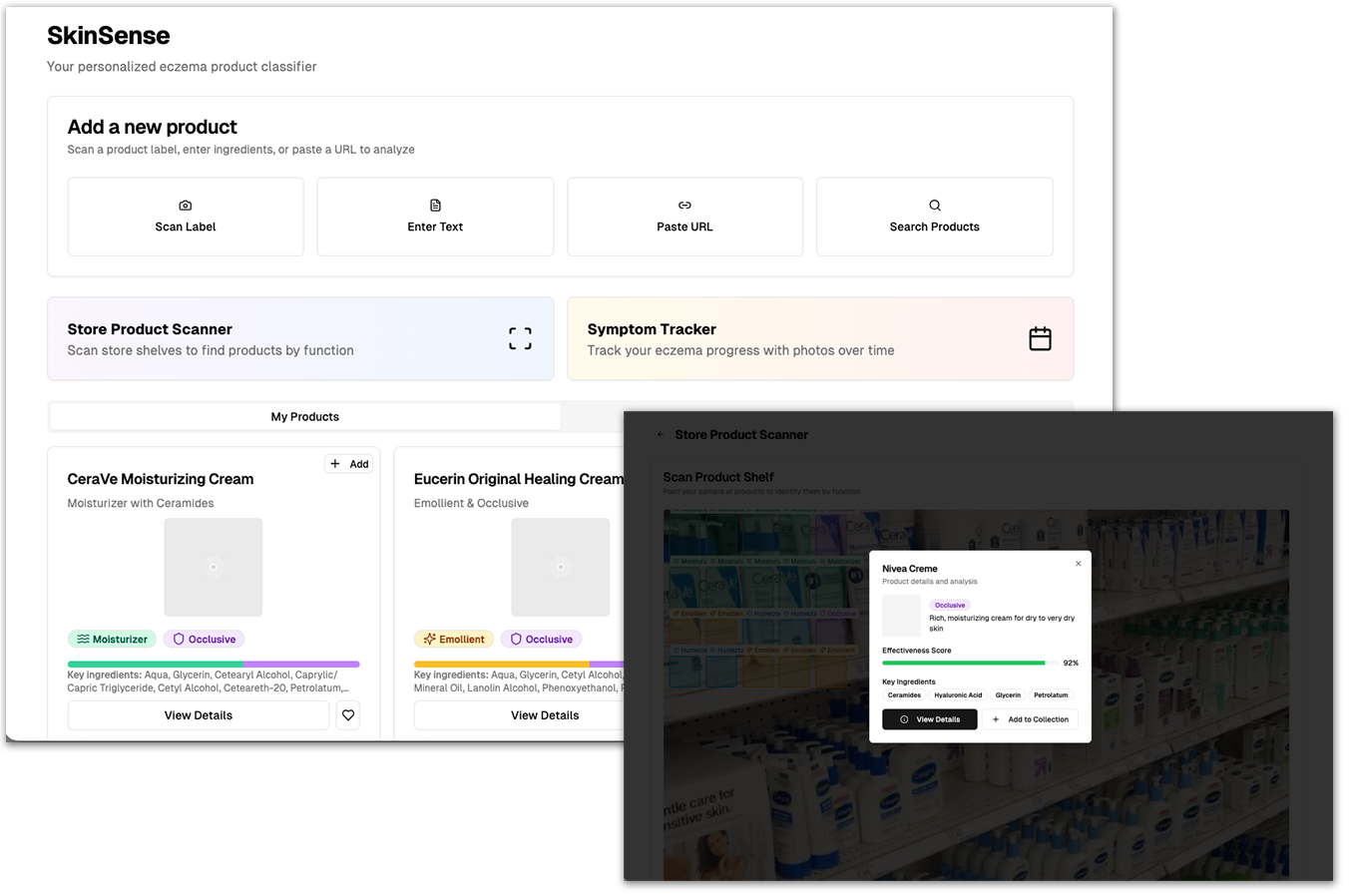
AI-powered prototype that recognizes skincare products in real time, classifies formulas by function, and aligns them with personal skin needs—bridging science, design, and everyday experience.
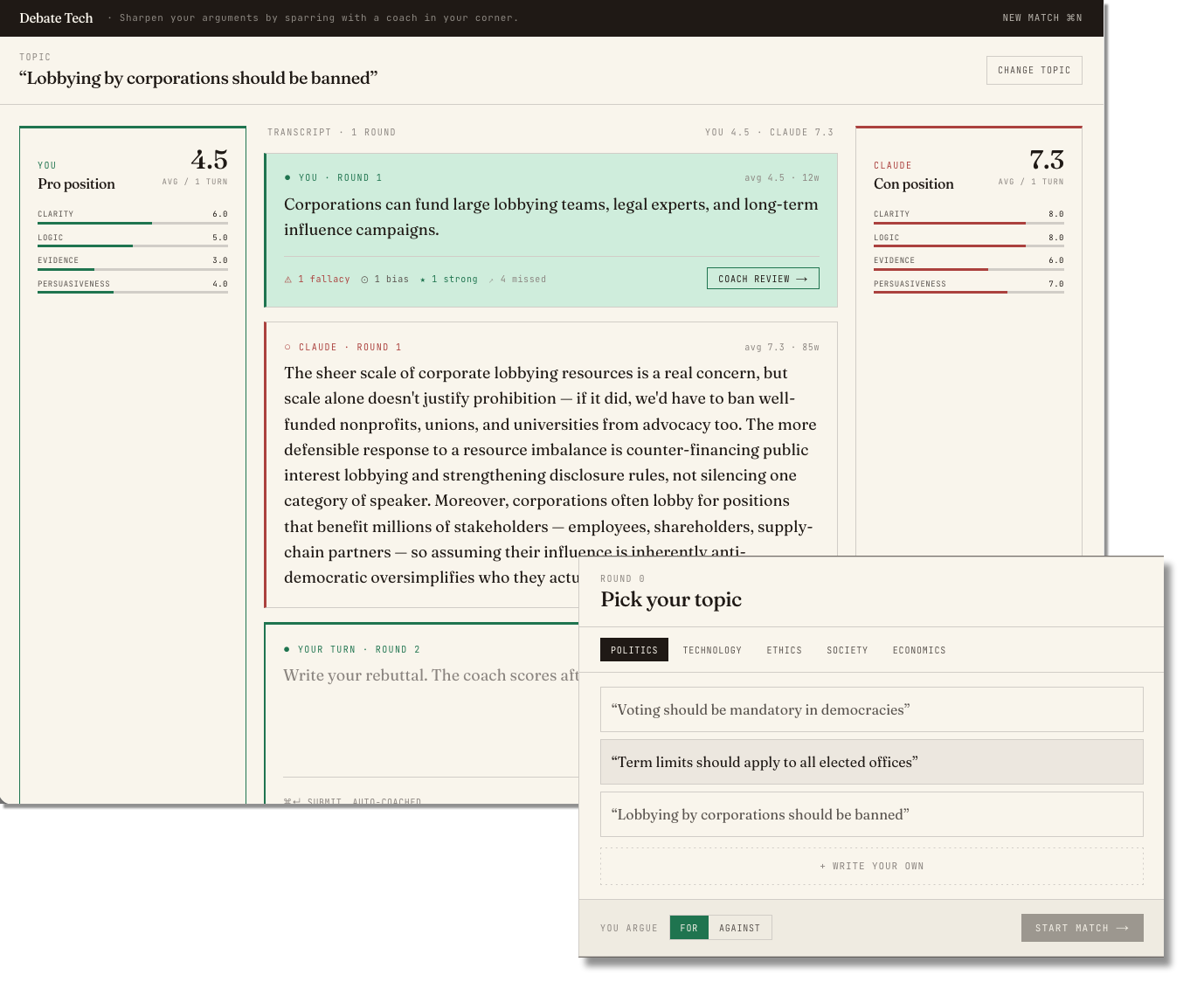
A sparring app for arguments. Pick a topic, choose your side, and trade turns with Claude as both opponent and coach.
Every argument gets scored on clarity, logic, evidence, and persuasiveness, annotated inline like an academic text, audited for fallacies, and rewritten using different rhetorical strategies. A running scoreboard tracks who's winning.
Anthropic APIClaude DesignNext.jsTailwindVercel
Made with AI: Experiment
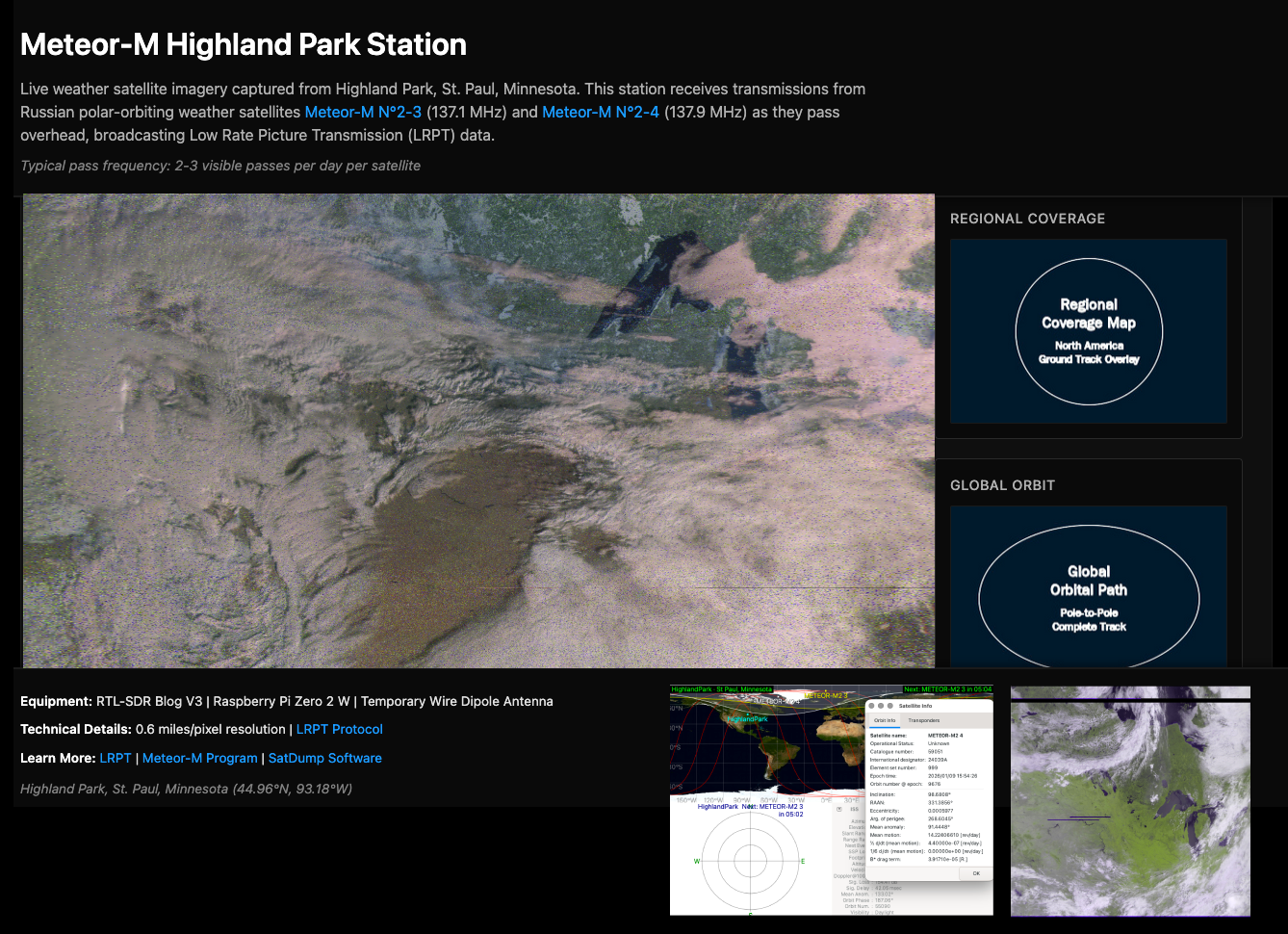
Meteor-M Highland Park Station
Live Weather Satellite Imagery Captured from Highland Park, St. Paul, Minnesota.
A ground station receiving Low Rate Picture Transmission (LRPT) data from Russian polar-orbiting weather satellites as they pass overhead. Images show a continuous strip of Earth captured during each ~10 minute pass.
Current Satellites: Meteor-M N°2-3 (137.1 MHz) and Meteor-M N°2-4 (137.9 MHz). Typical coverage: 2-3 visible passes per day per satellite over Minneapolis-St. Paul area. (Built off of a previous project, creating an aircraft location receiver.)
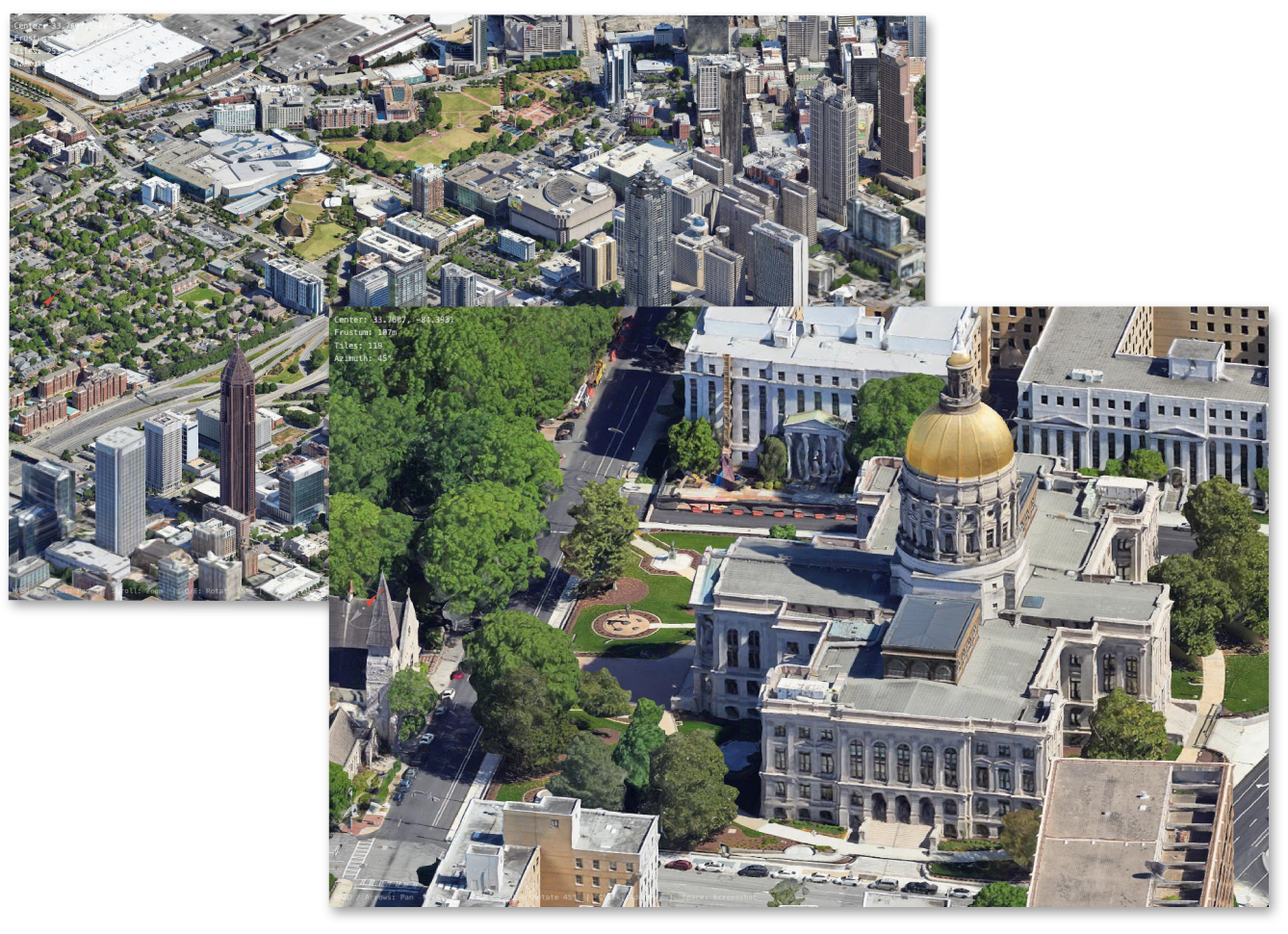
An AI-powered project that takes the same 3D building data behind Google Maps and transforms it into something entirely different — a stylized, scrollable isometric map of downtown Atlanta. The renderer is built and capturing the city.
Next, a fine-tuned image model will convert those photorealistic tiles into illustrated styles, with the architecture designed so new visual treatments can be swapped in by simply retraining the model.
Claude CodeGitHubGoogle Maps 3D Tiles APIMagicaVoxelThree.jsVoxCity
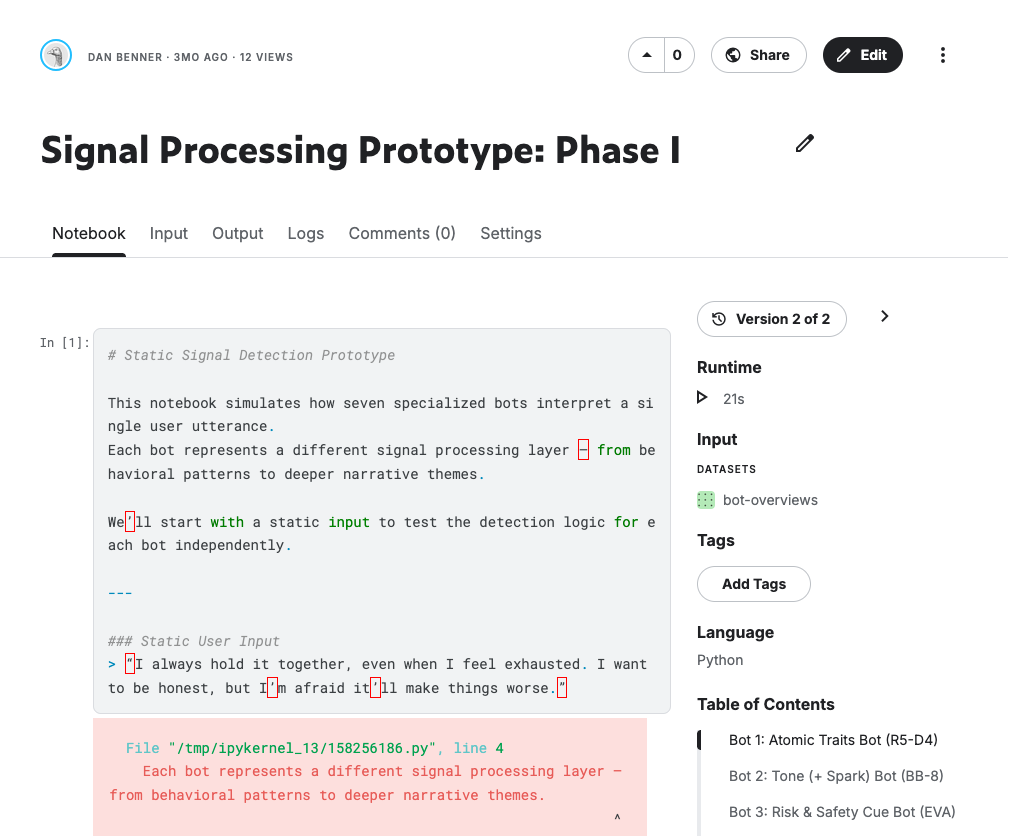
ML Notebook Prototype — Behavioral Pattern Detection
ML notebook prototype that analyzes a user's language for specific behavioral signals — emotional cues, cognitive distortions, resilience markers, and motivational patterns. Each signal is detected by a specialized classifier agent, turning open conversation into structured data the system can act on: how to pace the conversation, when to offer more support, when to acknowledge growth.
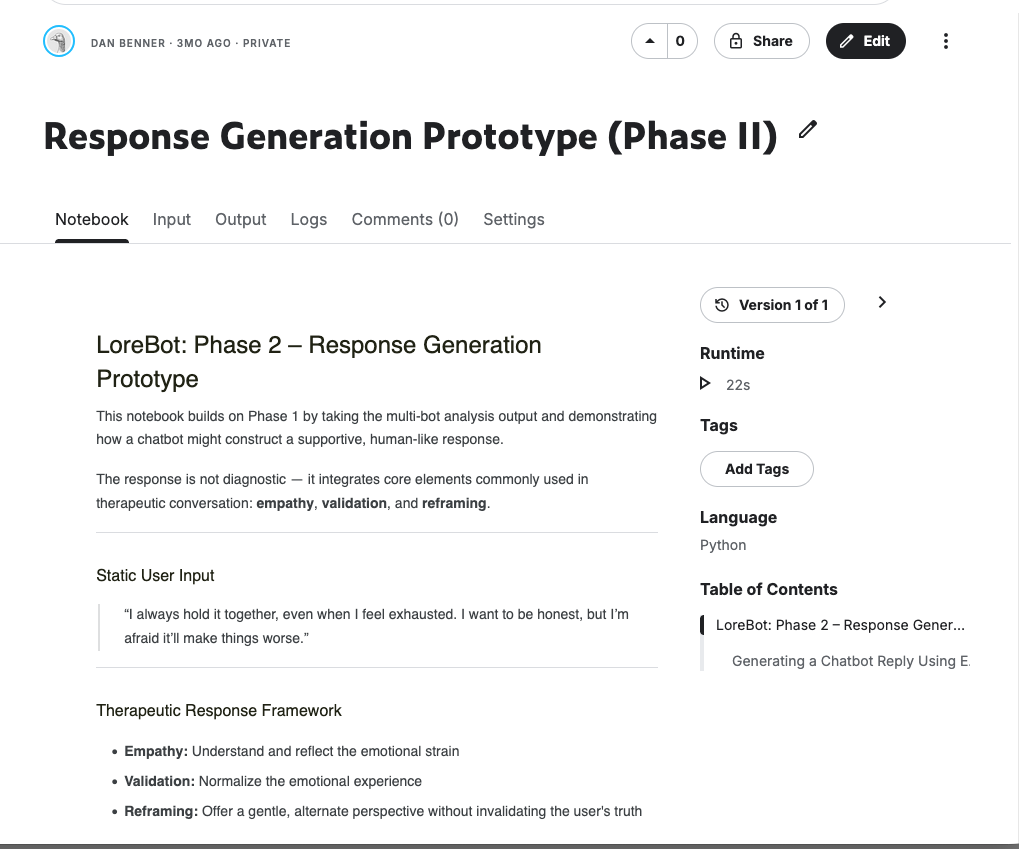
ML Notebook showing how those signals get used. Instead of responding to the surface of what someone said, the system assembles a reply from the underlying pattern — the emotional intensity, the coping style, where the person is in their story, what kind of resilience they're showing.
Each response combines four things: empathic reflection, validation, cognitive reframing, and forward guidance. The result is a CBT-aligned reply built from behavioral evidence rather than keywords.
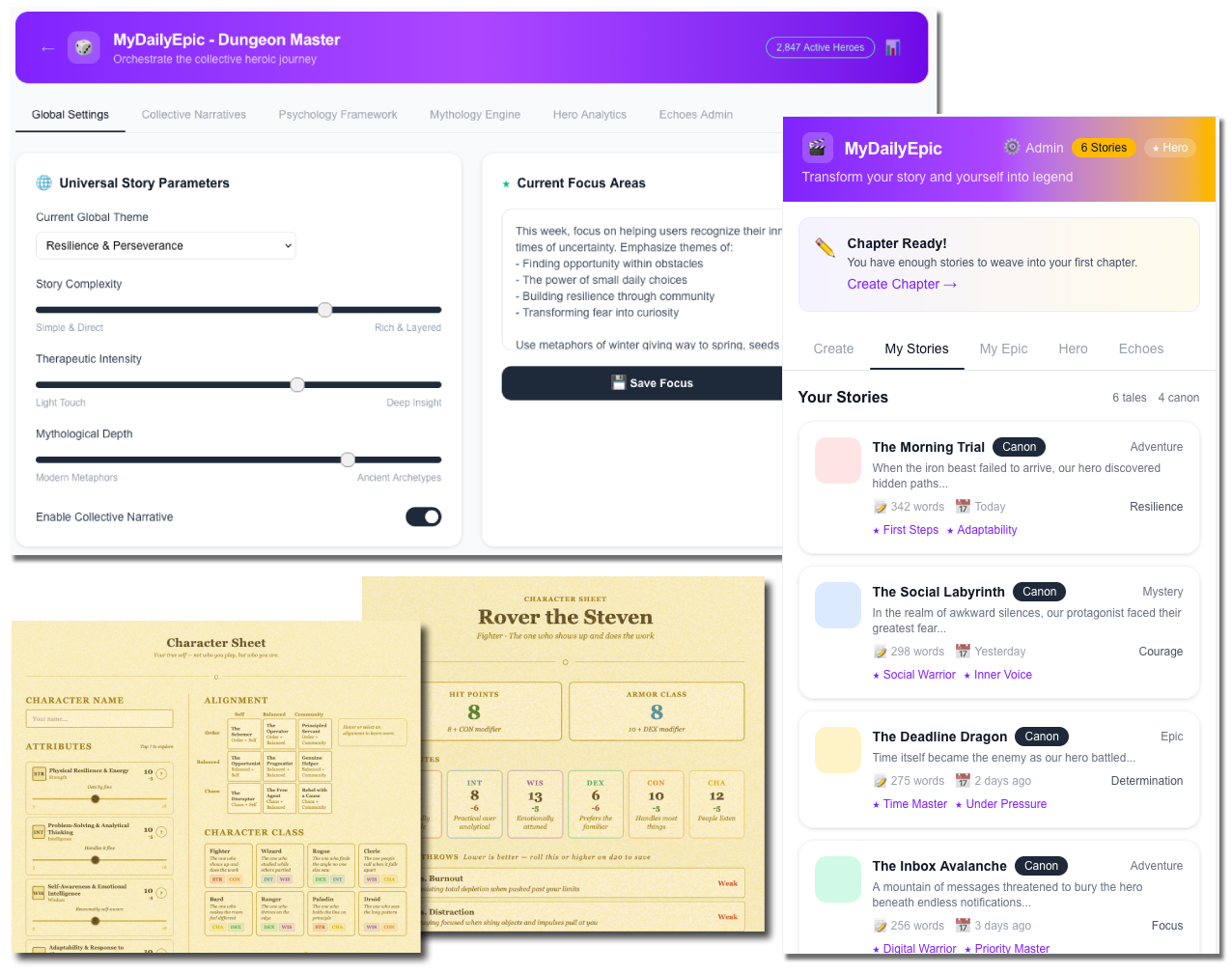
MyDailyEpic transforms daily struggles into epic tales. Share a frustration — missed bus, work conflict, life challenge — and watch it reimagined through fantasy, sci-fi, or mythology.
Grounded in cognitive behavioral therapy, the experience uses narrative reframing to help users identify core values and build resilience — no clinical language required. Inspired by Joseph Campbell's Hero's Journey.
ChatGPT Deep ResearchGitHubReactTailwind CSSVS CodevØ by Vercel
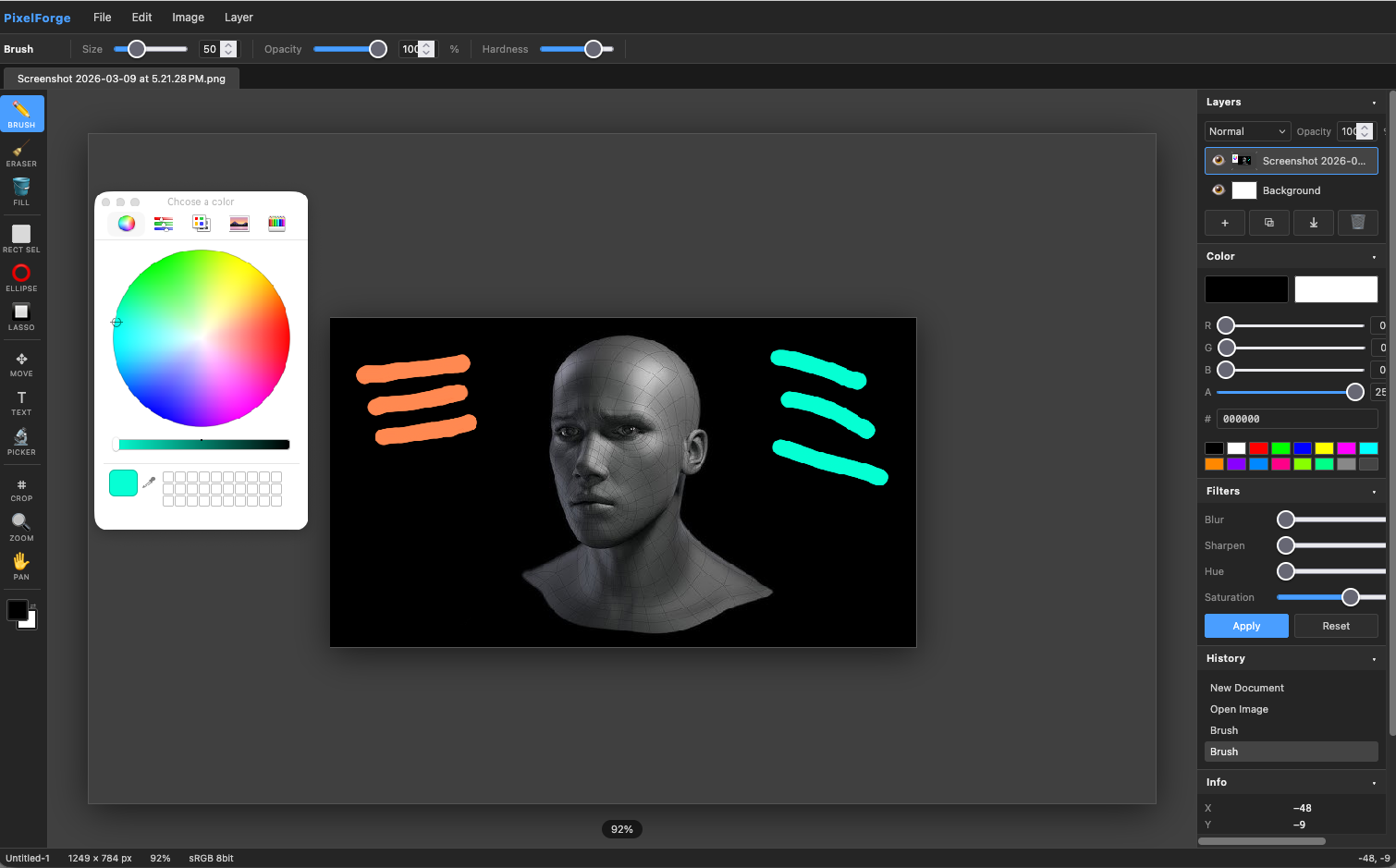
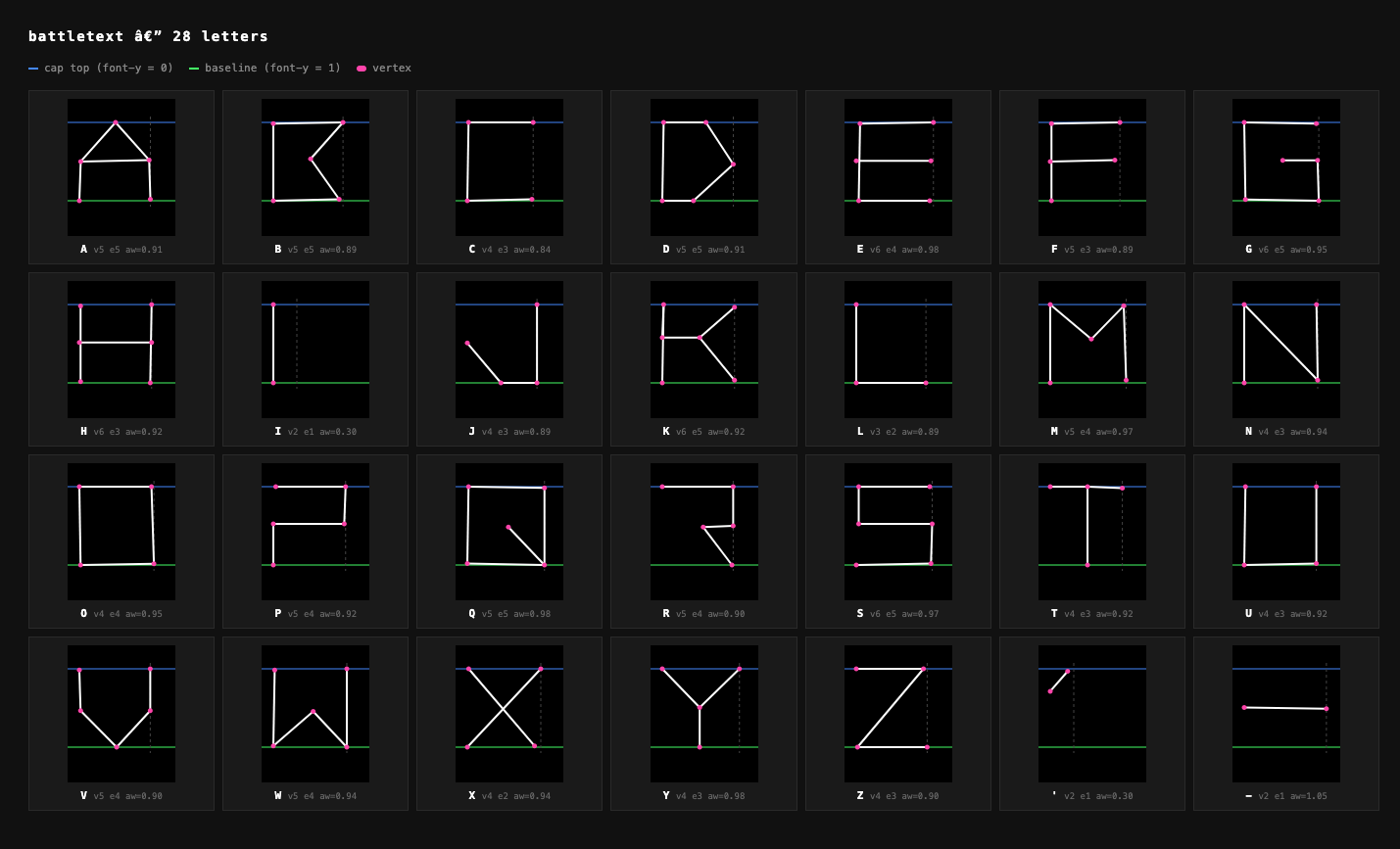
Two browser-based creative tools. Both are client-side, built in vanilla JavaScript with no server, no dependencies, and no framework.
PixelForge is a Photoshop clone I can add features to as I need them. Built on the Canvas API: layers, blend modes, a filter panel, and core tools (brush, fill, lasso selection, crop). It started as a way to see how far a creative tool could be pushed without a framework, then turned into something I actually use.
VectorBuild draws vector graphs and tunes how they render through a simulated CRT vector display. That's the technology behind early Atari arcade games like Asteroids and Tempest, where a beam traced glowing lines directly across the screen instead of filling in a grid of pixels.
How it works: every edge has two beams travelling toward opposite ends. Each beam deposits energy at its destination vertex and restarts. Energy decays every frame, brighter energy means a brighter tier color, and a visual floor keeps dim lines from disappearing.
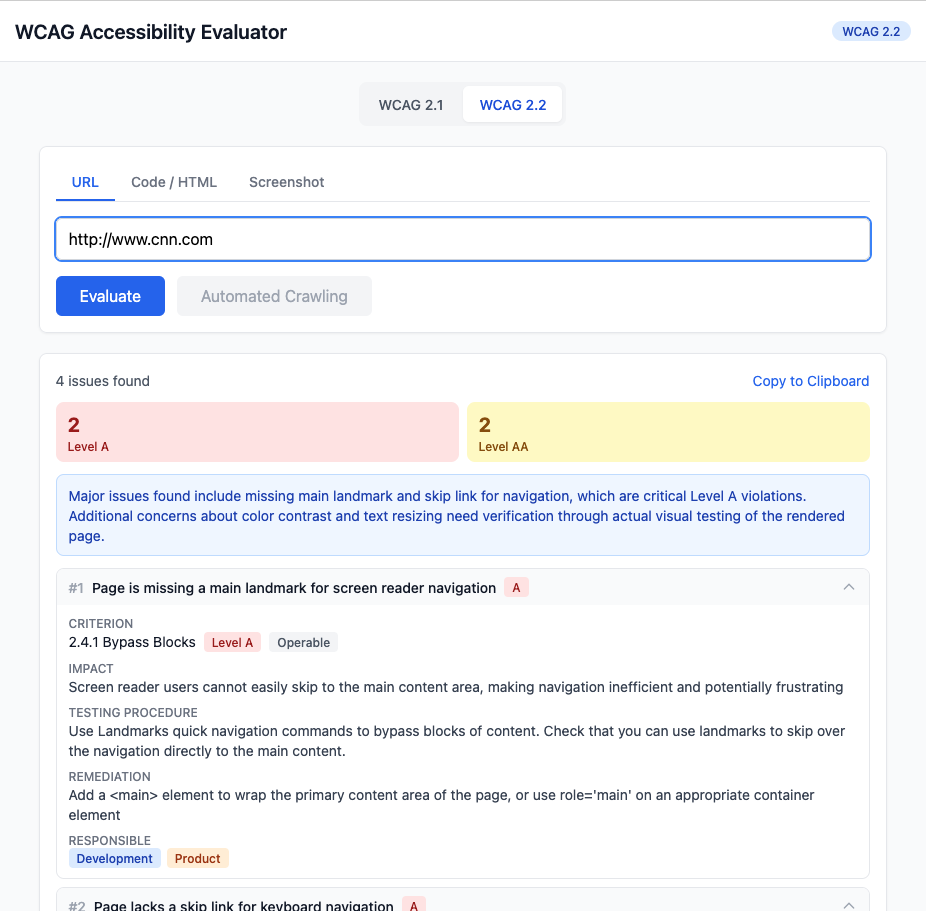
An accessibility evaluator that covers all 86 WCAG 2.2 success criteria — across all four principles: perceivable, operable, understandable, robust. Most automated tools catch around 30% of issues, mostly contrast and alt text. This one is built to find the rest.
Submit a URL, a screenshot, or code. You get back the testing method for each criterion, who on the team owns the fix (design, development, or product), the specific steps to remediate, and how the issue actually affects users.
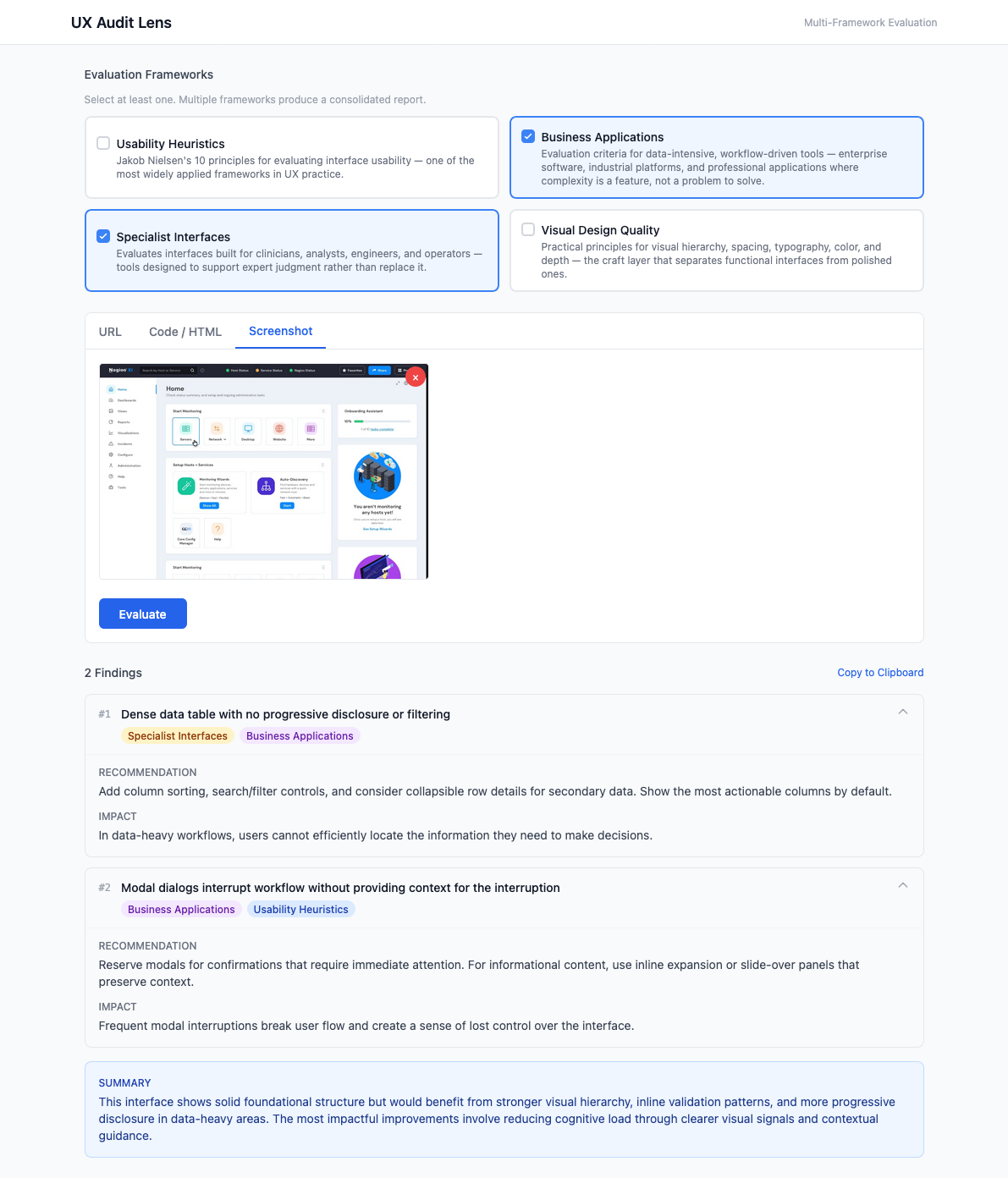
Most design reviews rely on gut feel or a single checklist. UX Audit Lens runs your interface through multiple UX frameworks at once — paste a URL, upload a screenshot, or drop in code — and returns findings tagged to specific principles from Nielsen's heuristics, WCAG, and cognitive load research.
Each finding tells you not just what needs attention, but which lens caught it.
The system uses retrieval-augmented generation (RAG) to ground its analysis in a curated UX knowledge base rather than relying on the model's general training.
A conversational triage system trained on 25 years of Geek Squad call transcripts to guide customers through hardware and software troubleshooting. Combined decision tree logic, machine learning classification, and natural language patterns to reduce support call volume.
Its next design challenge: balancing customer control with guided problem-solving, replacing linear FAQs with a dialogue that adapts to the terms the user says or understands.
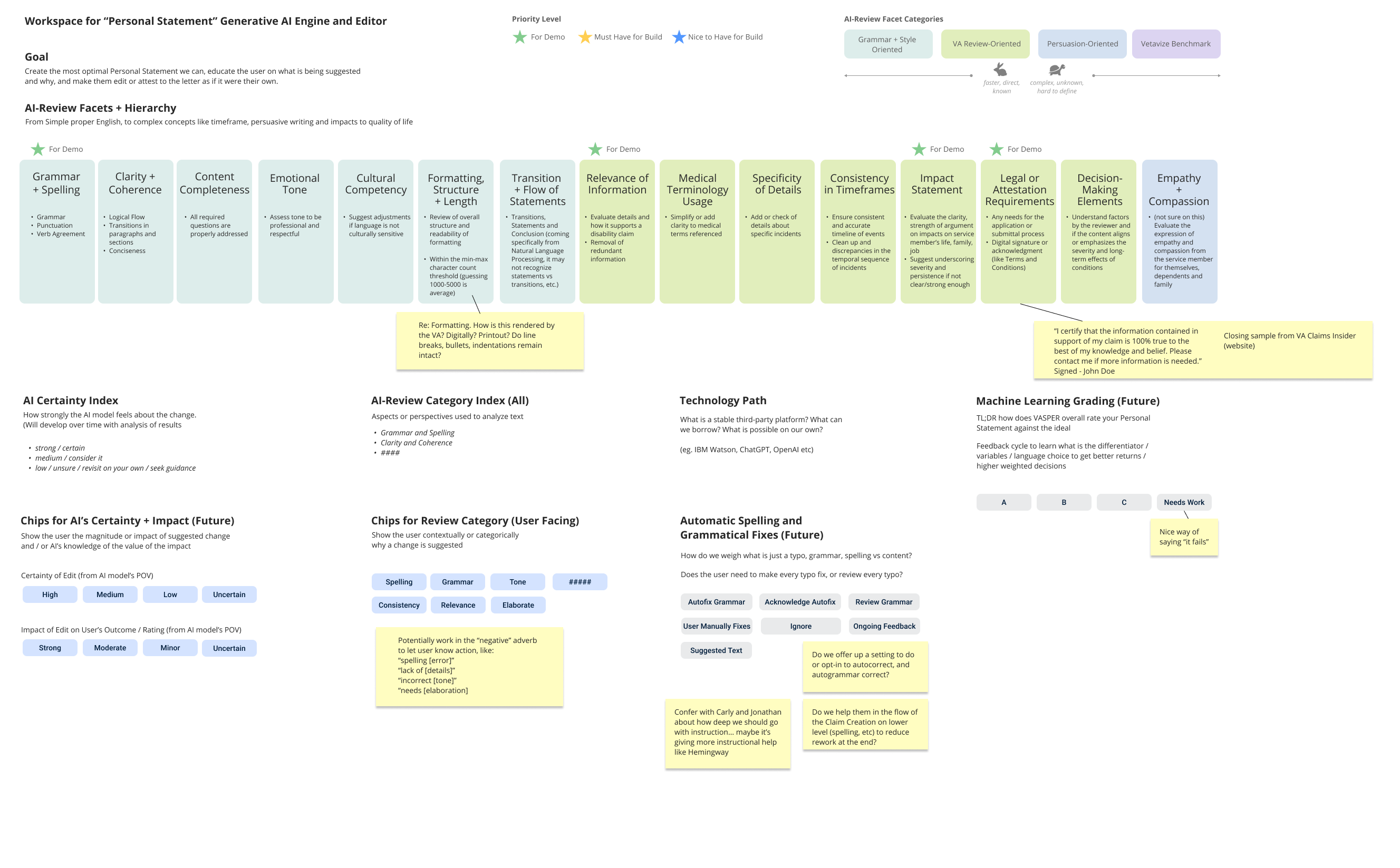
An AI strategy for Vetavize, a benefits app for veterans navigating the VA claims process. The roadmap progressed from basic writing help toward systems that could evaluate claim quality and track outcomes — each phase designed to capture which suggestions correlated with successful claims.
That data would feed VASPER AI, a model trained on what actually works with VA reviewers rather than what sounds right.
The projects above are recent AI experiments. My full portfolio covers 10+ years of UX strategy, product design, and research across healthcare, retail, enterprise, and Fortune 500 clients.